Showing posts with label Recommendation. Show all posts

Friday, 13 September 2013

Book Review: The Spanish Holocaust by Paul Preston


The Spanish Holocaust: Inquisition and Extermination in Twentieth-Century Spain
Paul Preston, first published 2012


I picked up this book on a whim and with a money-off voucher while mooching about the tiny history section of the WHSmith in the soul-sapping Westfield shopping centre. Before I start my review, let me be clear what I was looking for, as it affects my thoughts on the book. I was after a decent introduction to the Spanish Civil War as a whole, covering the political, military and social aspects of the conflict. When I picked the book up, I knew little beyond the Curt of Analogue Hobbies' wonderful miniatures, AARs and intelligent posts on the subject.


A group of Curt's fine Carlist Requetes, used with permission

The cover includes many encouraging plaudits and quotes, with it having won Sunday Times history book of the year. Finding it in the pitiful historical section in a high street shop, I mistakenly assumed this book would be what I as after. I was quite wrong!

As the title suggests rather more obviously that I had realised, this work of 700 pages is a comprehensive review of the repression of POWs, political figures and innocent civilians by both the right-wing Francoist military rebels and the Republican regime of predominantly Unionist, Communist and Anarchist organisations. The author clearly wants to set the record straight on which regime was more repressive, using statistics to prove, seemingly beyond doubt, that the Rebels were more repressive by an average of three times the number of individuals murdered. The author calls the repression the 'Spanish Holocaust', his own term and an emotive one that he carefully justifies in the prologue. This is organised by locale and by region and presents statistics based on the latest research available to modern historians.


A Spanish Civil War propaganda poster, courtesy of ALBA

The book makes clear that repression in rebel-controlled zones was planned, a staggering strategy of extermination, despite the Francoists' propaganda claims that they were only responding to incidents of 'red terror' and that they used appropriate legal processes. The claims of 'red terror' were outrageous propaganda based on exaggeration of real events and outright invention and claims to use legal processes were clearly an outright and deeply hypocritical lie to generate support for their cause. The disturbing litany of Rebel atrocities was helped by happening in remote areas, far from neutral observers, which in turn helped Franco obtain/retain the support of more of the international community, Spanish elite and Catholic Church.

In comparison, while there were atrocities in the Republican zone, these are presented as mostly being in response to Rebel actions such as bombing raids on civilians, being encouraged by agents provocateurs and and not being centrally coordinated. In fact the author documents the many attempts to prevent atrocities by individuals and the Republican government. With its revisionist aims, the book goes to great lengths to attribute responsibility to individuals or organisations for particular atrocities on both sides, wherever possible, generally having more success in the Republican zone due to the superior records of the crumbling state (despite some clumsy attempts by the Madrid Junta to conceal later atrocities) and the larger number of international diplomatic and non-governmental observers.

Another propaganda poster, courtesy of ALBA

The structure of the book detailing repression region by region lends itself to a repetitive feel, presenting the Republican repression before the Rebel advance, then the much greater, planned and brutal Rebel repression, before singling out a few, usually two or three, examples which are notable for the profile of the victims or the scale or brutality of the atrocity. I found the most interesting chapters were later in, particularly chapters 9-11 (of 13) on the atmosphere and events in Madrid in the year before the end of the war and the sections on foreign support for each side, particularly Nazi Germany's material contribution and its hunt for German exiles, as well as the Soviet Union's illicit activities in Madrid and Barcelona to hunt and eliminate 'Trotskyists'.

The book is clearly written for people with a solid grounding in the subject. The progress of the war and specifics of the Rebel and Republican forces are barely covered beyond generalities, for example the Battle of the Ebro is referenced, but never expanded upon. There are a colossal number of individuals mentioned and they are given the briefest introduction so I found it hard to make sense of who was important and who wasn't in the wider context of the military and political conflict. Some are referenced again many pages after first being introduced, with only the briefest of memory jogging. The turbulent events meant there were scores of acronyms for organisations on both sides, as well as the authors' use of many Spanish terms like 'sacas' (seizure and extrajudicial killing) and 'checas' (informal police forces and detention centres) throughout. There is a glossary at the back but the author could at times have made it easier for an unfamiliar reader: I found the term 'fifth column' and 'fifth columnist' first used many pages before it was described what the term meant. This all adds to the sne the book is quite specialised, but despite a few niggles, that I was able to follow the narrative fairly well is testament to the quality of the writing.


And in miniature, Curt's female Anarchist 'Milicianas'

The book seems to close quite suddenly, whisking through the ongoing repression in the years immediately afterwards and fate of those who had fled to France after its all to Germany in the Second World War. The coverage of repression throughout the rest of the Franco regime was in a similar format: statistics and case studies, but seems very brief, which is a little jarring compared to the heavy detail in earlier chapters. The final chapter, 'The Reverberations', covers the re-writing of history by the Francoist regime and national movement for the recovery of historical memory' from the early 2000s and some reaction to this. the chapter also covers some examples of the guilt of the oppressors, tracing ten or so case studies, including some occasions where perpetrators apparently get their 'comeuppance'. But there is little significant effort to draw conclusions on the effect of the repression on modern Spain, which I had expected given the apparent expertise of the author.

One of my comments was going to be the lack of a map of Spain, as the stats are broken down by both town and region and my knowledge of Spanish geography isn't good enough to make sense of the progress of the war and repression. But about halfway through, I found a series of maps and graphical summaries of the repression in each region described in the text, both in an Appendix nestled between the substantial Notes and equally substantial Index. I would have preferred the maps in a more obvious place at the start of the text. While the book contains two eight-page sections of black and white images, these cover a faction of what the text covers and were difficult to contextualise, not being referenced in the text and often appearing many pages from where the individuals/organisations are first described.


Pablo Picasso's work Guernica, created in response to the aerial bombing of the town of Guernica in April 1937, image courtesy of Wikipedia

In conclusion, I wouldn't be able to recommend this book to someone in my position: new to the field and looking for an overarching introduction to the military, political and social conflict. It certainly is not (and does not claim to be) a general history of the war. Understandably, its focus on the brutal repression offers little 'wargaming potential'. That is not to say I didn't get anything from the book: I found it powerful and deeply disturbing and learned a colossal amount about its subject matter. Even in my inexpert view, it is clear that this is a meticulously resourced work from an British historian who is clearly an expert in the field. It is more of an academic work, providing the statistics of the repression as best can be accounted and based on the work of many historians, all drawn together into one coherent book. To present such challenging material in such detail yet remain accessible is extremely impressive. The quality of the referencing is exceptionally strong as of 700 pages, 530 cover the text and a substantial 170 covering a glossary, notes, appendix and index. The author naturally draws heavily on Spanish source material, including many first-hand accounts and the work of modern Spanish historians.

I greatly respect the book as a modern history and attempt to set the record straight through clear presentation of facts, statistics and assessments, based on meticulous research. For those with a reasonable grounding in the conflict and who are looking to learn more about the repression of the conflict, or students of early 20th century history and fascism, it would appear to me to be an essential work, particularly for English-speakers, drawing as it does on so much original Spanish-language material.

Wednesday, 10 April 2013

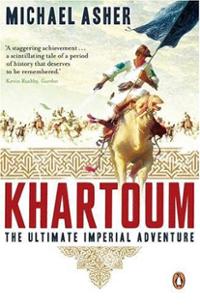
Book Review of Khartoum: The Ultimate Imperial Adventure by Michael Asher


I've just finished Khartoum: The Ultimate Imperial Adventure as the first serious (i.e. not googled!) reading around British involvement in the Sudan. And did I pick well: I can happily say it was an exceptional introduction to the conflict. Michael Asher has a very entertaining style and really brings the conflict to life, making the book hugely readable. His description of battle scenes is particularly good for a serious historical text, balancing the strategic, tactical and noteworthy individual/unit actions. 

The initial chapters cover the seeds of the uprising really well, clearly explaining the background of the Madhi and touching on some of the tribal structures, trickier subjects to cover briefly for a Western reader. This helps explain how the situation developed and was exacerbated by early Egyptian and British actions.


The political background and events of General Gordon's mission to evacuate Egyptians from Sudan gets well covered, as dies Asher's assessment of his and character and decisions. Also well covered is the Suakin campaign, which is noted as achieving nothing but Asher feels was a missed opportunity. 

On the 'Gordon Relief Expedition', there is a significant focus on the Desert Column, with the River Column barely mentioned. I admit I know little about the subject, so for me , it would have been nice to cover the latter a little more even if the Asher felt the Desert Column deserved more of the glory. This is one of few areas where I felt Asher may have misjudged and that I want to find further reading on. The impact of the failed expedition, particularly for UK politics is neatly covered too.


General Gordon, source

Asher seems to want to set the record straight on certain individuals they he feels were unfairly slighted after the events, particularly Wilson and Gordon himself. Others he clearly thinks little of. Asher's opinions are clear, I'd be interested to see if other eminent historians differ! 

The section on the reconquest and Omdurman campaign is briefer, feeling almost like a postscript to the previous events. But it is covered adequately to provide closure which feels right for a book which majors on Gordon in Khartoum. 

There are multiple clear maps of the region as well as of major battles, which are all very useful. There are also a number of images that really help to bring both characters and era to life. Obviously the author is helped that this comes from a time where journalists and illustrators joined British forces to capture the moment with relative accuracy and from when there are lifelike portraits of individuals on both sides available. 

In closing, Asher draws some links to the modern age, perhaps unnecessary in the context of a modern historical  text on the conflict, but it does draw out the relevance of the conflict quite succinctly and neatly. However this postscript seems a few years old, so I wonder what Asher, who is presented as an expert on Sudan, might have to say on more recent events in Darfur and South Sudan. As well as notes and a solid bibliography,  the book ends with a 'what next' for most of the main personalities, even the steamers and railways that feature which was nice to close on. 

I learned a huge amount from Khartoum and it had really filled me with enthusiasm for my own Sudan project - more on that soon! 

Highly recommended. 

Sunday, 3 February 2013

A Terrain Distraction: 4Ground Tree Bases Review


I recently picked up some of 4Ground's laser cut wood 'Tree Bases'. I thought they looked really useful, were well priced at around £1 each and while restricted to the shapes they sell, would save an age cutting my own out. I hoped them being two layers of wood would mean they wouldn't warp when sanded and flocked. I do like that the base inserts can be pulled out if you wanted to put more miniatures in, particularly when using formed units. Also, different terrain could be switched in and out by building a variety of the 60mm inserts so I bought an extra pack of 60mm bases to do so.

Image from the 4Ground site

Happy to say these were a smashing success! I made half up as trees, using Noch ones I had in stock. These trees are a tad small for 28mm, so I'd like to get a few bigger trees to mix in. The woods are also a bit sparse for thick woodland, I was reluctant to glue any trees to the base to make them as adaptable as possible, though I did liberally apply rocks, hedges and tufts. I might add a few trees to 2ps which I can drop on top. Of could these and the inserts could also be used as scatter terrain without the bases.


I also made some as simple 'rough ground', for Sudan or Spain. These were a doddle, I just used rocks and bits that I had in stock. One thing I did to each bases was sand the sides down at an angle and apply some wood filler, to avoid having a 'stepped' look. This is optional but I'd recommend it to make them look their best, while it took a bit longer, it was still less than making the whole base from scratch.


Pros
-tough and durable, no warping at all.
-adaptable, both in terms of different terrain types and removing pieces in-game to accommodate miniatures.
-inserts can still be used as scatter terrain
-for smaller scales, I think a bit of work could be make them into pretty decent hills.
-really well priced at 90p or £1.20, can't argue with that!

Cons
-I felt the needed some time sanding and filling to make them look their best.
-only two shapes available
-larger sizes would be good for 28mm scale gaming

I'd like to make up some trees on 2ps, larger trees on 60mm inserts as well as some tall rock structures to get a bit more height and make more 'blocking' terrain. I think I could do a few more adventurous things too, perhaps overgrown ruins, or something in an archway shape which connects two of the inserts. I also want to apply hacksaw and imagination, discard the inserts and make them into a pond or marshy ground.

Thursday, 31 January 2013

Operation Squad: Brief AAR and Review

Quick post tonight to note a great first game of Operation Squad with Samulus. We took reduced squads, me with 8 (freshly painted!) German infantry and Samulus with 8 British commandos.

It was a game of two halves, the right half of the table ending up a troops hunkered down in cover sniping at each other. Perhaps my fault for not putting more blocking terrain down. The centre was dominated by two buildings and I managed to get a well-positioned MG34 to keep a large building full of Brits suppressed. Well, cowering at the number of shots I could throw out, at least!


MG34 team heads for the rooftop

Surprise! Sarge guns down a rampant German


The game ebbed and flowed well and before we realised it was late enough and our forces were dwindling and routing, so agreed it was a draw.


Disaster! MG gunner fails his break test and leaves the field. It was a still a draw despite this setback, honest! 

I really enjoyed Operation Squad. The action/reaction mechanics initially needed the application of braincells, but flowed better after a turn or two. The game encourages you to use squad tactics and have your troops work together.

Pros
-designed to encourage squad tactics, captures the feel very, very well.
-elegant mechanics, the way MGs worked we thought was quite excellent.
-makes for a tense game, some dice rolls really matter, which is fun!
-I think the core mechanics would work well for Weird WWII, with tinkering and adding some different flavours of troops, without breaking the core mechanics.

Cons
-requires both players to pay attention or it can go quite slowly
-some scenarios not explicitly covered by the rules
-restricted squad lists (easily solved by the application of imagination and scenario design!)
-long ranges require a lot of terrain, echoes of my Infinity days here
-uses quite a few counters, unless you've got a good memory!

So after one game, my feeling is definitely very positive and I look forward to trying new things out like mortars and Panzerfausts. If you're aftet a pick up and play, small scale squad action game, I'd recommend it!

Now, can I justify some more suitable 4Ground buildings?

Sunday, 12 August 2012

Tiny Worlds Stone Walls: Painting part 2

Continuing from my last post, the walls needed some foliage, of course. First up, static grass in two colours. Spring green and some 'African Grass' which has a nice scorched grass colour. Notice the hedgerow now ncludes bushes - two small lumps I had spare from the AoW hedgerows set.


Finally, of course I had to add a scattering of Mininatur Tufts - early fall and late fall. These make an appearance on most things these days, i tried to drop them into the crevices where i imagine bushes and weeds will grow from. And with that, I declare them finished!

Here's a shot of the hedgerow connector. Not bad except the flocks are slightly different since I did the hedgerows.


And to finish off, some Perry plastic Redcoats making use of the cover, to show them in action and the scale.


And there you have it - I hope you I enjoyed my first two-part review and tutorial!

Saturday, 11 August 2012

Tiny Worlds Stone Walls: Review and Painting part 1

I spent ages towards the start of the year looking for some decent stone walling in 28mm scale. Everything I found was either a ghastly pile of kitty litter, or way over the price I was happy to pay. The nicest I found was from Architects of War, while I really like their hedgerows set, I couldn't quite justify the cost - the walls cost the same as the hedgerows but seem worse value for money to me - no foliage and only 34" of wall, as opposed to 40" of hedge.

Eventually, eBay came up trumps: these resin casts from eBay store'Tiny Worlds'. I bought two sets a four and a six pack. I think together they a bargain price of £16 including postage.


So they score highly on value for money as there is over 45 inches of wall here. The arrived well packed and surprisingly nicely sculpted, including good variation - two sculpts of the long 6" lengths, as well as a ruined section. Then there are two sculpts of a shorter section of 3" and a ruined one of that length, plus two end-pieces. I like the mix of lengths, should be able to snake them around the board a bit more naturally.

I've two relatively minor gripes:
-the casts had a lot of small air bubbles and needed quite a bit of tidying with a knife. I had to do a fair bit of work filling the bubbles - you am be able to make out the darker spots above, where I'd green-stuffed them. And of course I haven't caught them all.
- they are perhaps a little bit low - 20-22mm including the base. I did consider mounting each piece on 3mm board to add a little height, but decided it was far too much faff. I'll post a shot with some 28mm minis in my next post.

Other than that, I'm really happy with them for the price. Overall a solid 8/10.

I dint normally post painting tutorials, mostly as I wouldn't presume to have that many original techniques to share, especially with terrain. I think my style is too clean to lend itself well to making decent terrain. But I remembered to take photos at each stage for once, so I will use them.

After the prep and a burst of white undercoat, I thought I'd save on using modelling acrylics for the a decorating by buying some decent emulsion - Little Greene Stone Dark Warm seemed a nice start. This is how they looked after two coats.


Next up, some washes, on the earth banks rather than the walls: two washes of Watered Vallejo 'Earth'. Then, a wash of watered Vallejo 'Charred Brown'. Finally, some sparing use of precious Devlan Mud, in the very deepest recesses. Each stage was quick, but all these layers meant they took the most part of a week of evenings to paint as I'd have to wait for each stage to dry. But doing them between other projects meant this wasn't much of a problem.


You may note one end has no wall and was sprayed black. This is to make a piece which merges into the AoW hedgerows I mentioned earlier. I knocked this up by mounting a short piece onto Foamed PVC (great stuff!), building it up with wood filler then some sand for texture. It'll get foliage later.

Next up: drybrushing of course! Vallejo Earth plus some GW Bleached bone, highlighted to bleached bone on the earth. The wall being lighter, I started with bleached bone and did a couple of highlights with white. And here we are, looking pretty good, but not quite finished...

Saturday, 7 July 2012

Launch of the Aegeus the Game Blog!

As I've mentioned before, my brother (Gharak here on Blogger and elsewhere) and I have started playtesting a skirmish game set in mythical ancient Greece. The game will be called 'Aegeus: Age of Mythical Battles'. The idea is to create a set of rules for heroic combat between opposing warbands as well as to all you to play scenario-based games from Greek Mythology.

Gharak has started a Blog to spread word about the game and share concepts, sculpts and some design notes. Check it out here:
http://aegeusthegame.blogspot.co.uk/

While we've been playtesting with miniatures we picked up from various manufacturers, but Gharak intends to have a line of miniatures sculpted for the game and has already had some awesome concept art done. He is looking at hiring some excellent sculptors for the line.

Check out the concept for Theseus:

And a generic Athenian hero:

All images are Copyright Aegeus the Game 2012

Tuesday, 3 July 2012

Gruntz - second playthrough

Another 15mm SciFi post before I move onto a fresh topic. I got a second game of Gruntz last week, with Samulus once again. I won't write a full AAR, after all they say a picture tells a thousand words, right? (Samuus - youre welcome to pull together a more detailed writeuo). And do please forgive the unpainted terrain, it's one of many things I'm working on!

Deployments from the New Vedith perspective. Simple objective: capture the industrial complex, particularly the central storage tanks

'Robots, sir, faaaahsands of 'em'

Jus' chillin'. Chillin' in our wood

New Vedith shock troops take a pasting from their Autosentia counterparts

Endgame: huddle round the objective. A tight-run thing and could have gone either way: we called it a draw

We tried Gruntz with some modifications, notably:
-more detailed command system (which I liked)
-double wounds for infantry in cover (made them nicely survivable, but really reduced the impact of vehicles)
-modifications to the jump packs special rule
-some common sense tweaks, such as no dismounting infantry from fast-moving vehicles

Although it was fun, it was pnt quite righ and needed further tweaking. Samulus and I agreed to revisit again when 1.1 comes out, or try out some other systems.

On a final Gruntz note, there is an awesome Web-based force builder, available for free here:
Grunt-o-matic
Recommended - made making a force on a printable PDF a complete doodle. However it is restricted by the current Gruntz rules, it prevents bending them when designing units.

Friday, 25 May 2012

Giveaways galore at Frontline Gamer

Frontline Gamer is in the middle of a series of giveaways as he hits new follower targets. Not only that, he's very insightful hobby blogger, if occasionally controversial. So his blog is well worth checking out on it'd own merits:

Frontline Gamer

Saturday, 19 May 2012

Gruntz AAR and review

As Samulus describes, we played through a game of Gruntz the other night with my fledgling New Vedith Defence Force troops facing Samulus' robotic Autosentia. We threw together some stats for what we had as best we could and played around 100 points. I had two NV infantry squads with support weapons, a platoon command base (Mal standing in) and two IFVs which had fortunately arrived from Antenociti that morning.


The battlefield from the NV perspective. Terrain was cobbled together from what I had already, except the alien jungles I knocked together during the week from some plastic fish tank plants that Gharak gave me years back.

We were a but short on suitable counters, so used red gems for waxed (wounded) troops, blue for suppressed, White dice for a command 'push' order which grands a bonus action or for vehicle damage and a small green dice for prone which gave combat bonuses.


An NV IFV's laser and missile weapons take their toll on the Autosentia assault troops.


The IFVs spectacularly fail to bring their weapons to bear on the Autosentia mech, whose Gatling gun decimates an NV squad. The Mech was a bit overpowered for its size, something for us to tweak.


Autosentia light infantry combine fire and damage an IFV, which was helpfully laser-painted by the nearby drones. But NV infantry push forward and gun down the light robots. I conceded shortly afterwards, although close it was a rules taster rather than a competitive game and we wanted some time to discuss our thoughts.

So, what did we think? I'll start with some pros:
-really nicely presented and well-written rulebook for a bargain download price of £6. We struggled to find some specific rules (such as what flamers do), but overall a solid product
-interesting mechanics which seem to mostly work right. Although I wouldn't personally agree with all design decisions, such as the lack of a rate of fire, Samulus and I both felt it was a very good base which we could tweak to our taste
-easy to use unit-builder with a points system. We were happy to use it as a guide and bend the rules if needed. And having not played before, some of our first efforts were a little bit skewed - the mech too powerful and IFVs seemed pretty tough.

Cons? Happy to report there isn't much that we felt we couldn't tweak to suit with our own house rules. Something I'm increasingly happy to do, as I have developed pretty specific tastes in rulesets. These were the things we thought could be improved:
-command system. While we used the alternative activation rules and there is a small command element in the way you can use your command base, i think this could be deepened. I've already an idea for how to develop this further. Also, the need for a command base didn't really fit with Samulus's robot force.
-I can see the mathematic appeal of a 2D6-based combat system but it became a bit ungainly with our 8-man squads as we only had 5 different pairs of dice. We will try 4-man fireteams next, breaking out special weapons as attachments.
-the range of modifiers meant shooting became a bit maths-y, adding 2D6 plus stat, plus or minus modifiers, with a target number that could also vary from modifiers. We really needed a decent reference table and for personal taste I might streamline some of the modifiers.
-Gruntz sure died quick, even in cover. If we use smaller fireteams, I'm toying with the idea that cover and prone status should grant Gruntz an extra wound rather than a to hit modifier, from small arms fire at least. I don't think this will break the core system so we'll try it out and let you know how it works.
-Some oddities like equipping combat knife being optional, but free. I'd have thought all but the worst rabble would 'count as' having a ccw, be it knife, gauntleted fist or rifle-butt!

As I say, these opinions can pretty much all be easily fixed with house rules. I would definitely recommend people looking fir a ruleset to check out Gruntz.

Also, the author of Gruntz was kind enough to comment on Samulus' blog with his response so in the interest of balance, please see here. It is great to see that Robin is open to constructive feedback and I'm pleased to see that at least some of the points are already being tweaked for future editions.

Have a nice weekend, bloggers!

Saturday, 12 May 2012

Jumping ship to Vallejo - impressed!

With GW overhauling their paint range again and with my disastrous experience with both their purity seal and skull white sprays, I decided it was time to jump ship to Vallejo Game Colour. As I'm not made of money, I'll make the transition over time, replacing and buying new colours from the Vallejo range as necessary.

*

So I've been trying out my new colours as well as making some colour swatches to check compatibility (which look fine actually). And I must say I'm impressed so far. I like the consistency, it's quite thick but flows well and gives a smooth finish, unlike the GW foundation paints. Colour coverage is great....mostly. I've had issue with scaly green and jade green being watery, but I think they just need a lot more shaking. I hope so anyway. I'm also surprised that I like the dropper tops, although it increases wastage at each use, I think it will stop me throwing so many dried-up pots of paint away. Especially as with GW I can be lazy and paint straight from the pot or leave them open as I highlight a whole colour.

They even blew me away on price. I bought six pots and it came to £10-something at Dark Sphere, who sell at discount. A bargain compared to GW so I'm not surprised Vallejo are putting their prices up soon.

Issues? Well the colour swatches on the rack seem to occasionally be well-off, after settling on magic blue for the very specific shade I was after it ended up totally different to the colour I was after. But it still looks good on the minis that I wanted it for. Similarly, jade and scaly greens look like they should be different enough to be base coat and shade as I planned, but they actually look pretty much identical.

I shouldn't be surprised, I've heard many times that Vallejo were the paint of choice for many good painters these days. I'm actually a little disappointed that it took me so long to make the jump.

Hope y'all are having a nice weekend and enjoying the sunshine.
Phil

*(I didn't buy this set, it was just the most suitable image I could find :-) I'll post some pics of my results with Vallejo soon enough though!)

Saturday, 7 April 2012

History: Exeter Cathedral

With an hour to spare after a shopping trip in Exeter, we went to Exeter Cathedral. Not normally one for religious buildings, I was pleasantly surprised. It had a stunning interior including the largest medieval vaulted ceiling in Europe. It was rich with history, too, having been a religious site since the 7th Century.
The Cathedral also demonstrates the military importance of the local area, with the major port of Plymouth just down the coast. There were numerous memorials, not only from the World Wars. The finest was one for the 9th 'Queen's Royal' Lancers. Not pictured here, but it was a fabulous monument noting their achievements and losses during the Indian Mutiny. Unexpectedly, more men were were lost to 'the climate' than in combat.

The first memorial pictured is to the 20th East Devonshire Regiment. Hanging above are their mid-19th century Colours, which haven't aged well.
Next up, memorial to Lieutenant General John Simcoe, who founded Toronto, apparently. The figure on the right was curious, wearing a toga where the other two are richly (and seemingly accurately) uniformed. The small inscription below notes that his son was killed in the siege of Badajoz while the memorial was being constructed.
Finally, an outdoor shot showing one of the oldest, Norman towers of the Cathedral. All in all some unexpectedly good history to learn. And the shopping? A curious haul of socks, bread and two new board games!


EDIT: The store I got the board games from is well worth a shout-out. Clifton Road Games near Exeter city centre. Lots of board games to browse and a motley collection of miniature gaming ranges and supplies. A friendly staff member was happy to recommend me games based on my somewhat vague parameters. Without that I'd probably have left without a purchase as I wasn't after anything specific. But after just one game of Evo I'm happy with my purchase.


Wednesday, 21 March 2012

Free? Really?!

To the board gamers out there, I learned from a recent Dice Tower Podcast that there is a free App for Dominion available on i-devices (not sure about Android). Although not official, its continuing existence on the App store suggests it is sanctioned in some way. But yes...it's free. Pretty good deal, huh? I've stayed away from App versions of Board Games I own because I'm very reluctant to pay for something twice.

Having tried the App out today it plays just like core set Dominion, with decent computer AI opponents and an option for online play. Unlike the free web version which also exists, it actually uses the official Dominion artwork, which makes it much more appealing visually. Downsides are that the interface could do with a polish and I have had it crash mid-game. But heck, its free.

Although popular, Dominion does take a little picking up due to the variety of ways of winning and the dramatic differences from game to game caused by the different setups available. So although there is a tutorial I do imagine the App will be pretty baffling to the newcomer. But if you're a board gamer and enjoy card or Euro games, you may well enjoy this medieval-themed combination if the two, which focuses on players each constructing themselves a deck of cards which represents their kingdom. It really is a clever game and well worth a look. And of course, buying the core set rather than just getting the App means you reward the creators of this fine game.

Saturday, 17 March 2012

A little bit of history

Living in London means there is an incredible choice of museums, galleries and other attractions to see.

Crossed another off the list today - the small but interesting Household Cavalry museum on Horse Guards Parade.

Much of the museum was detailing the odd blend of ceremonial and active combat duties that the Household Cavalry perform, as well as the daily duties of the Regiment. Apparently on
Ceremonial duties they spend 10 hours cleaning and polishing both their and their horse's kit each day. A really nice touch was passing through part of the stables, most of which is still in use. So you could see some of the horses and squaddies going about their daily business.

Plenty of relics on show too: their Squadron Standard (you can see the Peninsula and Waterloo battle honours in this snap) for the Napoleonic enthusiast there was also a copy(!) of the French Eagle of the 105th that they captured at Waterloo, Uxbridge's false leg after he lost his at Waterloo and plenty of original sabres, helmets and kit. Smaller displays touched on duties quelling the Jacobite rebellion, in South Africa and changes in warfare into the 20th Century, World Wars and present day.

All in all a great little museum at a fair price so well worth a trip.

Thursday, 9 February 2012

Shameless plug for an amusing blog

Evening gamers and painters!

A personal friend of mine has recently started a new blog, pitched as a weekly British version of satirical newspaper 'The Onion'. I think it is really amusing, but he is keen on getting more readers!

So this is a shameless plug and do comment here or on his blog.

Check it out here:
http://swizonsunday.wordpress.com/

Cheers!

Monday, 6 February 2012

Illuminated manuscripts - surprisingly interesting

This weekend my Dad wanted to see an exhibition on illuminated manuscripts at the British Library. I was happy to indulge, but couldn't muster much enthusiasm in the subject. Turned out it was a nice surprise - a vast collection on both religious and non-religion texts, delightfully illustrated, from the Royal Collections held at the BL.

The works themselves were nothing without the context around them, which was succinctly presented and integrated into the displays. Plenty detail to the historical backdrop, mostly of the Was of the Roses and 100 Years War. Having studied Henry VIII at least twice in school history lessons, seeing the very Bible the King and Cardinal Wolsey pored over and annotated in their search for the justification for Henry to divorce his wife was pretty darned interesting, actually.

Most of the works were from between 1100-1500 and were real treasures. There were even a book of psalms from the Anglo-Saxon period, and the burned remnants of one work dating from around the year 500. I wonder if these artists realised their work would survive a thousand years later? Not bad for some cured hide, pigment and gold leaf.

Another fine example of just how much history the UK has to offer. Darn, I sound like a tourist-board advert. Highly recommended but I stress I have no affiliation with the BL!

I'd best bring this back to wargaming - the exhibition almost tempted me to grab some miniatures for Wars of the Roses/Medieval skirmish. Perry miniatures just happen to do a couple of boxes at a very reasonable price... Whilst I'd have fun painting them, I would never get a game with them, so I'll leave it as a project I could do as a diorama one day.

Sunday, 29 January 2012

What a nice surprise!

I was pleasantly surprised today to receive a package postmarked Hawaii. Sent by Bob Murch of Pulp Figures, who is not only sending out packages while on holiday, but included a personalised note too. Best of all, I only ordered them a week ago.


Excellent service and fantastically characterful miniatures. Highly, highly recommended as a retailer and from our exchange of emails he seems a thoroughly nice bloke to boot.


Expect to see these packs as future Challenge entries.